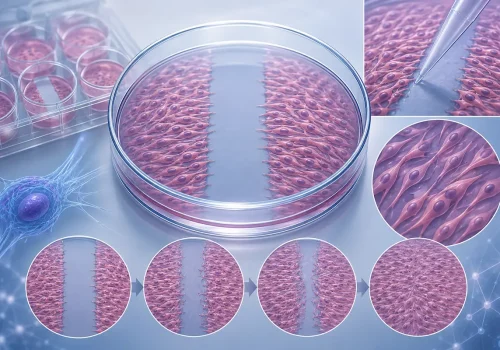


In recent years, peptides have begun to occupy an increasingly important place within regenerative medicine and longevity therapies. Although for a long time they were little known outside the scientific community, today they are considered by many specialists as tools with enormous potential to modulate biological processes related to tissue repair, inflammation, recovery, and cellular function (Fosgerau & Hoffmann, 2015).
Their growing interest stems from a fundamental characteristic: peptides act as biological signals capable of activating specific mechanisms within the body. For this reason, they are often described as “master keys” that help to ignite natural regeneration processes.
What are peptides?
Peptides are short chains of amino acids that the body produces naturally and that participate in multiple physiological functions. They act as messenger molecules, allowing communication between cells and tissues (Lau & Dunn, 2018).
Within the body, they play a role in processes such as hormone production, immune response, wound healing, metabolism, and cell regeneration. Over time, some of these mechanisms decline in activity, which has spurred medical interest in peptide-based therapies.
How do they act in cell regeneration?
Unlike other therapeutic approaches, peptides do not seek to replace bodily functions, but rather to stimulate specific biological responses. Depending on the type of peptide, they can activate pathways related to tissue repair, collagen synthesis, muscle recovery, inflammatory modulation, or cell protection (Hamley, 2017).
This effect occurs thanks to its ability to bind to specific receptors in cells, triggering biochemical signals that promote various regenerative processes.
In simple terms, they function as targeted biological instructions that help the body respond more efficiently to damage, inflammation, or cellular wear and tear.
Applications within regenerative medicine
Clinical interest in peptides has grown, especially in areas related to recovery and functional medicine. They are currently being studied and used in contexts associated with muscle recovery, sports injuries, joint health, inflammatory processes, and healthy aging (Maggio & Mantyh, 2021).
Some peptides have also attracted interest for their potential role in neurological protection, gastrointestinal repair, and metabolic optimization, although many of these applications are still under investigation.
Within regenerative medicine, they are frequently integrated as part of broader protocols along with cell therapies, exosomes, and metabolic support strategies.
Differences compared to stem cells and exosomes
Although they are often mentioned within the same therapeutic environment, peptides have different mechanisms than stem cells or exosomes.
Stem cells provide regenerative biological capacity and complex cell signaling. Exosomes act as mediators of intercellular communication, transporting molecular information (Rani et al., 2015). Peptides, for their part, function as specific activators of certain biological pathways.
For this reason, many current approaches consider that these tools do not compete with each other, but can complement each other within comprehensive medical protocols.
Security and scientific development
The study of peptides continues to expand rapidly. However, it is important to note that not all peptides have the same level of scientific evidence or regulatory approval for specific applications (Lee et al., 2019).
Quality, purity, and medical supervision are fundamental aspects of these types of therapies, especially due to the growing commercial interest that currently exists around them.
Research continues to advance towards the development of increasingly specific, targeted and personalized peptides, with potential applications in regenerative medicine, longevity and chronic diseases.
Peptides represent one of the most promising areas within modern regenerative medicine due to their ability to specifically modulate cellular processes. Their role as biological signals capable of activating repair and adaptation mechanisms has sparked enormous scientific and clinical interest.
Although multiple lines of research are still under development, current advances suggest that they could play an important role in the future of regenerative and precision therapies.
At America Cell Bank, we closely follow scientific advances related to advanced therapies and regenerative medicine, integrating innovative approaches based on evidence and specialized medical supervision.
References
- Fosgerau K, Hoffmann T. Peptide therapeutics: current status and future directions. Drug Discovery Today. 2015;20(1):122-128.
- Lau JL, Dunn MK. Therapeutic peptides: Historical perspectives, current development trends, and future directions. Bioorganic & Medicinal Chemistry. 2018;26(10):2700-2707.
- Hamley IW. Small bioactive peptides for biomaterials design and therapeutics. Chemical Reviews. 2017;117(24):14015-14041.
- Lee AC-L, Harris JL, Khanna KK, Hong J-H. A comprehensive review on current advances in peptide drug development and design. International Journal of Molecular Sciences. 2019;20(10):2383.
- Maggio ET, Mantyh PW. Peptide therapeutics in regenerative medicine. Expert Opinion on Biological Therapy. 2021;21(10):1285-1298.
- Rani S, Ryan AE, Griffin MD, Ritter T. Mesenchymal Stem Cell-derived Extracellular Vesicles: Toward Cell-free Therapeutic Applications. Molecular Therapy. 2015;23(5):812-823.