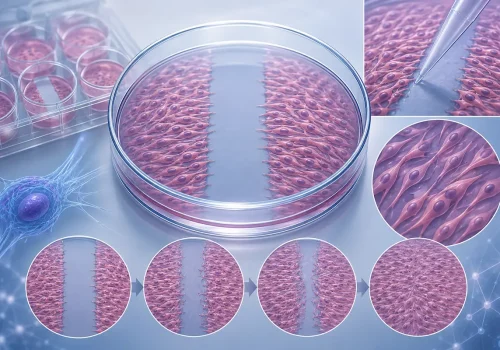



Regenerative medicine is evolving rapidly thanks to advances in biotechnology and molecular biology. Among the most innovative tools sparking interest in the scientific community are therapeutic peptides, biological molecules capable of acting as highly specific signals within the body.
In recent years, peptides in regenerative medicine have begun to be used as an alternative to stimulate the body’s natural processes, such as cellular repair, tissue regeneration, and immune system modulation.
Unlike many traditional treatments, peptides function by mimicking signals that the body itself already uses to regulate physiological functions, which has opened new possibilities within modern medicine.
What are peptides?
The peptides are short chains of amino acids, which are the basic building blocks that form proteins. While proteins are typically composed of long sequences of amino acids, peptides contain smaller fragments that can act as highly specific biological messengers.
In the human body, peptides fulfill multiple fundamental functions, including:
- Communication between cells
- Hormonal regulation
- Activation of cellular repair processes
- Modulation of inflammatory responses
- Metabolic regulation
These molecules participate in numerous essential physiological processes, which explains why scientists are investigating their therapeutic potential in different medical areas.
How do therapeutic peptides work?
Therapeutic peptides work by interacting with specific receptors on cells. By binding to these receptors, they can activate biological signals that trigger different responses in the body.
For example, some peptides can stimulate processes related to:
- Tissue repair
- Cellular regeneration
- Collagen production
- Immune system regulation
- Metabolic balance
Due to their molecular structure, peptides can act in a more targeted and specific manner, which has sparked great interest in their use within regenerative medicine.

Peptides and regenerative medicine: a promising combination
Regenerative medicine seeks to stimulate the body’s natural ability to repair damaged tissues and restore biological functions. In this context, peptides can play a key role by acting as biological signals that activate cellular regeneration mechanisms.
Currently, different lines of research are exploring how peptides can support processes such as:
- Muscle tissue regeneration
- Connective tissue repair
- Modulation of inflammatory processes
- Stimulation of collagen production
- Support for metabolic health
This has led peptide therapy to be considered one of the emerging areas within the development of regenerative treatments.
Why are peptides gaining popularity in modern medicine?
Scientific interest in peptides has grown significantly due to several characteristics that differentiate them from other therapeutic molecules.
Among the most important reasons are:
- High biological specificity: Peptides can be designed to interact with specific cellular receptors, allowing for the generation of targeted biological responses.
- Natural cellular communication: Many peptides mimic signals that the body already uses, facilitating their integration into physiological processes.
- Potential in personalized medicine: Advances in biotechnology are allowing for the study of peptide use within personalized medicine approaches, where therapies are tailored to the needs of each patient.
Integration of peptides with other regenerative therapies
Within modern regenerative medicine, peptides can also be studied as part of comprehensive therapeutic strategies. In some cases, their use is investigated in combination with other tools used in regenerative medicine.
These include:
- Cell therapies
- Growth factors
- Platelet-rich plasma (PRP)
- Functional medicine strategies
The goal of these combinations is to stimulate multiple biological pathways simultaneously, fostering an environment more conducive to tissue regeneration and repair.
The future of peptides in regenerative medicine
The field of therapeutic peptides continues to evolve rapidly. As research in molecular biology, pharmacology, and regenerative medicine advances, new ways are being discovered in which these molecules could contribute to the development of more precise and personalized therapies.
The ability of peptides to act as highly specific biological messengers makes them a promising tool within the medicine of the future, especially in approaches that seek to stimulate the body’s natural repair mechanisms.
Peptides in regenerative medicine represent one of the most interesting areas in the development of innovative therapies. Their ability to act as precise biological signals allows for the exploration of new strategies aimed at stimulating cellular regeneration and optimizing various physiological processes.
As scientific research continues to advance, it is likely that peptides will play an increasingly relevant role within regenerative therapies, opening new opportunities for the development of more personalized treatments based on the body’s own biology.