

When a baby is born, attention is usually focused on their arrival: the first cry, skin-to-skin contact, and the family’s excitement. However, at that very moment something extraordinary happens that often goes unnoticed: the possibility of collecting and preserving stem cells from the umbilical cord.
A simple, quick, and painless procedure that can become a decision that makes all the difference in your child’s future.
In this blog, we will explore why this seemingly simple decision can transform the life of a child and their entire family.
What makes umbilical cord stem cells so special?
Stem cells are known as “master cells” because they have the ability to self-renew and transform into different types of cells in the body, such as:
- Blood cells
- Immune system cells
- Muscle, nerve, and bone tissue cells
This plasticity makes them a fundamental tool in modern medicine.
Those obtained from the umbilical cord are particularly valuable because:
- They are young and pure: they have not been exposed to environmental factors or diseases throughout life.
- They have a lower risk of rejection: their immunological immaturity makes them more compatible for transplants.
- They are available immediately: by storing them in a biobank, they can be used without waiting for donors.

Diseases already treated with stem cells
Today, there are more than 80 diseases for which umbilical cord stem cell transplantation is approved and in clinical use. These include:
- Hematologic diseases: leukemia, lymphoma, myeloma, aplastic anemia.
- Inherited metabolic disorders: Gaucher disease, mucopolysaccharidosis.
- Congenital immunodeficiencies: such as Wiskott-Aldrich syndrome.
- Severe anemias: such as Fanconi anemia or thalassemia.
Thousands of transplants around the world have proven their effectiveness and safety.
The future: regenerative medicine and innovative therapies
Beyond current applications, research is opening surprising horizons. Ongoing clinical trials are studying the potential of cord stem cells in:
- Autism: with encouraging results in improving communication and behavior.
- Cerebral palsy: where partial recovery of motor function has been observed.
- Type 1 diabetes: exploring their ability to regenerate insulin-producing cells.
- Heart attacks and heart disease: helping repair damaged tissue.
- Neurodegenerative diseases: such as Parkinson’s and Alzheimer’s.
Preserving stem cells not only means access to therapies available today, but also preparation for those that will emerge tomorrow.
Family benefits: beyond the newborn
A little-known aspect is that umbilical cord stem cells do not benefit only the child who provides them.
There is a high probability of compatibility with siblings and parents, making this resource a family health tool.
- A sick sibling could receive a compatible transplant.
- Parents, in some cases, could benefit from regenerative therapies under investigation.
It is a biological legacy that impacts several generations.

Scientific support and the safety of the procedure
Collecting stem cells at birth is a painless, safe, and quick process performed right after delivery. It does not interfere with birth or create risks for the mother or baby.
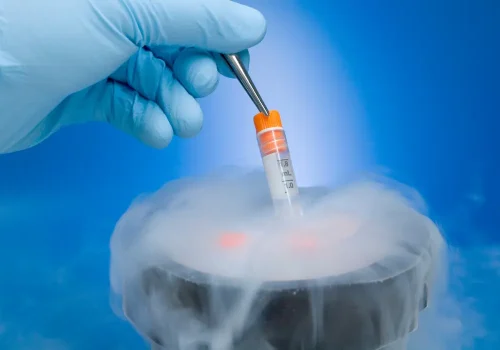
Once collected, the cells are transported to a specialized biobank, where they are processed and cryopreserved under conditions that ensure their viability even for decades. Scientific studies have confirmed that they can be preserved intact for more than 25 years, and it is projected that their usefulness will be even longer-lasting.
Unlike other insurance or preventive health measures that must be renewed year after year, stem cell collection is done only once in a lifetime, at the moment of birth.
It is an investment that combines prevention, science, and love for your child’s future, with potential that grows as research in regenerative medicine advances.
Collecting stem cells at birth is not simply a medical option, but a strategic decision that connects the present with the future.
- For physicians, it represents an opportunity to have valuable biological resources for complex treatments.
- For families, it means an act of foresight and care that can change the course of life in the face of an unexpected illness.
In a world where medicine evolves every day, making this decision is giving your child the possibility of accessing the therapies of the future, today.

At América Cell Bank, we provide families with the technology, experience, and scientific support needed to ensure the safe collection and preservation of umbilical cord stem cells.
- We are pioneers in regenerative medicine and biobanking in Latin America.
- We have standardized protocols endorsed by international organizations, such as the FDA.
- We offer affordable plans, with financing options and family benefits.
With ACB, you are not only storing stem cells: you are protecting your child’s future health and that of your entire family, with the confidence of being in expert hands.