


Pulmonary fibrosis is an idiopathic disease. It presents as a chronic fibrosing interstitial pneumonia. It is progressive and of unknown etiology. It occurs mostly in older adults with an average age of approximately 55-75 years. It only involves the lungs, where it enlarges and inflames fibroblasts and modifies the extracellular matrix. This lung disease is fatal. It has a survival time of 3-5 years.
Until now, the drugs pirfenidone and nintedanib have been the only medications that have allowed prolonging the time to stop the progression and deterioration of this disease. They also inhibit the deterioration of lung function and increase survival in humans. However, they do not provide a definitive cure and are not well tolerated.
In the scientific-medical review, it has been proposed to conduct future clinical research to identify the best therapeutic options with the application of stem cells for the treatment of pulmonary fibrosis.
What are these cells?
They are the body’s collection of blood cells (white blood cells, red blood cells, and platelets). They are capable of regulating the body’s immune response.
Benefits of cells and their application as a regenerative treatment
- The pluripotency of mesenchymal cells, in combination with their ability to balance immunity, stop inflammation and benefit epithelial tissue regeneration, is timely and shows promise. There is hope in applying this therapy as an effective treatmentfor interstitial lung disease.
- At present, the application of the cells as a treatment for idiopathic lung disease and other pathologies has been demonstrated to be safe.
- It is also believed that the transplantation of mesenchymal genetic material, combined with pharmaceutical therapy of antifibrotic drugs (pirfenidone and nintedanib), helps to slow down the fibrotic increase in the cells. The mechanisms of action are not yet very clear.
- The body’s cells are housed in the soft tissue surrounding each blood vessel. By making a local incision, the genetic material is obtained. Bioactive molecules and extracellular vesicles are secreted, promoting an immediate response in the immune system.
- The cells promote instant regeneration after insertion. The application of these cells has great advantages. They are readily available and proliferate easily.
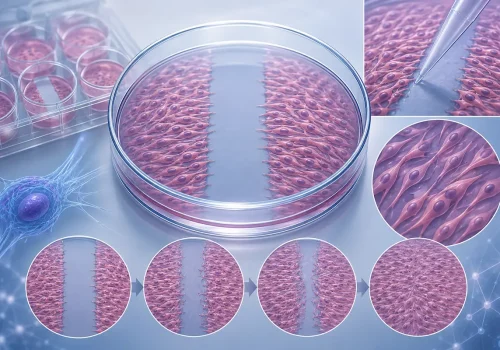
- Through the stem cell, epithelial tissue is restored, and the inflammation process of affected cells is inhibited. Due to its tissue-repairing effect, this implanted material stimulates different growth factors. For example, keratinocyte growth, hepatocyte growth, epidermal growth, and angiogenesis.
- These cells also act as repair agents and as storers of adenosine triphosphate and internal functions in the recipient cells.
- The implantation of cells also regulates the adaptive immune system. It decelerates the maturation of T cells and dendritic cells.
- It also inhibits the growth and increase of B cells and killer cell cytotoxicity.
- Cells from bone marrow were the first type most commonly used to combat lung diseases.
Finally, we can say that, thanks to the methods and advances in reconstructive medicine technology, the efficacy and safety of stem cell treatment have been proven. In recent years, it has been corroborated that they could attenuate different diseases of pulmonary origin.
With stem cell transplantation, restoration of implanted tissues is achieved through migratory cells. However, research continues to advance to improve and expand other therapeutic strategies. The goal is to achieve greater success in treating the disease. The results are promising, but not definitive.
References:
https://www-ncbi-nlm-nih-gov.translate.goog/pmc/articles/PMC6299195/